Mass General Cancer Center, a member of Mass General Brigham, is an integral part of one of the world’s most distinguished academic medical centers and is consistently ranked by U.S. News & World Report as one of the top cancer centers in the country.
Our mission is to advance knowledge and rapidly translate discovery into exceptional, personalized cancer care for our patients.
Our commitment to advancing patient care and research has earned Mass General Cancer Center the recognition as a National Cancer Institute Comprehensive Cancer Center, one of only 53 centers to receive this designation. Mass General Cancer Center is also one of only 33 cancer centers that comprise the National Comprehensive Cancer Network®, an alliance of leading centers devoted to patient care, research, and education.
Experts Specialized in Your Type of Cancer
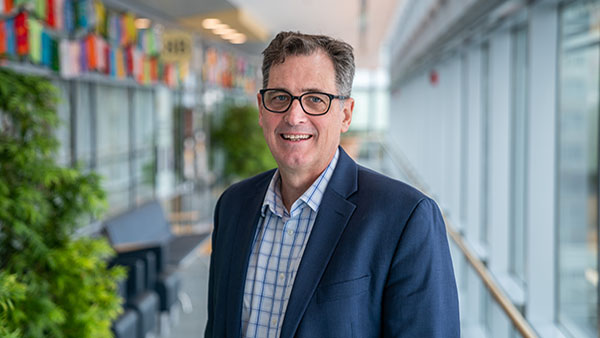
David P. Ryan, MD, Chief, Hematology Oncology and Clinical Director, Mass General Cancer Center
Mass General Cancer Center is at the forefront in providing specialized, coordinated cancer care and includes over 500 dedicated cancer specialists and more than 30 multidisciplinary disease centers and programs.
Our doctors are experienced in treating the rarest and most complex cases using the latest advancements in technology to provide personalized and innovative care.
Mass General Cancer Center treats both adults and children, including those with rare tumors of the brain, liver, pancreas, bone and gastrointestinal tract.
Our renowned, experienced surgeons perform a high volume of advanced procedures for both common and rare cancers.
Our radiation oncologists are leaders in developing and implementing some of the most innovative and effective radiation therapies in the world.
Compassionate Team-Based and Personalized Care
We coordinate our patients' care through specialized clinical centers and programs, ensuring that every patient benefits from a team of specialists who focus on their particular type of cancer. Along with our partners in radiation oncology and surgery, our multidisciplinary group of cancer experts develops and implements a personalized care plan for each patient.
Lecia Sequist, MD, MPH, Program Director, Cancer Early Detection and Diagnostics Clinic at Mass General Cancer Center
Our sub-specialized clinical teams provide patients with an individualized treatment plan based on a comprehensive evaluation during a patient’s first appointment.
We recognize that exceptional care begins with exceptional nurses and caregivers. Mass General was the first hospital in Massachusetts to receive Magnet nursing status from the American Nurses Credentialing Center.
Our expert diagnostics, subspecialties of pathologists and the most advanced imaging technology, provide valuable information on cancer subtypes and extent of disease that is used to personalize a patient’s care.
Our patients and families have access to a vast network of support services, including disease-specific support groups, a psychiatric oncology center, free education and wellness services, palliative care, and parent and sibling support groups.
Access to the Latest Treatments and Technologies
Mass General Cancer Center offers patients novel therapies and technologies that are frequently not available elsewhere, including:
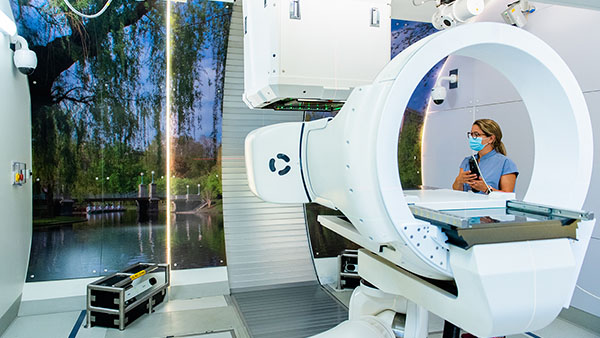
The Gordon-Browne Proton Therapy Center located in the Department of Radiation Oncology at Mass General Cancer Center
Proton Therapy: Mass General has the only proton therapy site in New England, with two proton therapy centers.
CAR T-Cell Therapy: Mass General Cancer Center is an authorized treatment center for several FDA approved CAR T-cell therapies.
Targeted Therapies: The Termeer Center for Targeted Therapies provides patients with access to early phase clinical trials of novel targeted therapies and immunotherapies.
The Cancer Center’s commitment to eradicating cancer is fueled by scientific investigation conducted as part of one of the largest hospital-based research programs in the nation. Through a powerful synergy between laboratory scientists and bedside physicians, the Mass General Cancer Center fosters innovation in all phases of cancer research. Physician investigators conduct nearly 500 clinical trials annually. These clinical trials have led to the approval of approximately 25 anti-cancer drugs in the last 10 years.
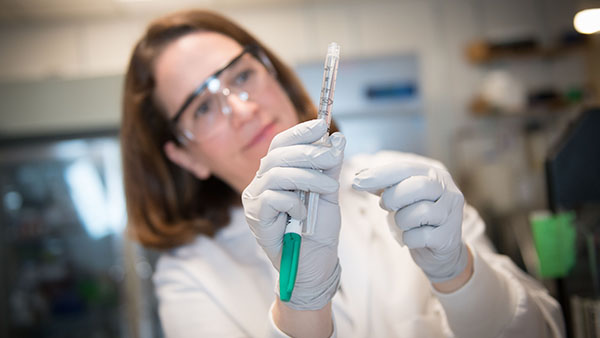
Shannon Stott, PhD in her lab at the Krantz Family Center for Cancer Research
Mass General Cancer Center is proud to be a founding member of a Harvard Medical School consortium designated by the National Cancer Institute as a comprehensive cancer center. This prestigious seven-member center forms the largest cancer research collaboration in the country. The promising new treatments developed through this partnership are revolutionizing the future of cancer medicine.
A Large Network of Community Locations
Our network of locations extends throughout New England and provides patients with comprehensive, community-based cancer care plus access to the expertise of world-renowned cancer sub-specialists. To find cancer care near you, visit our community locations page.
A Leading Cancer Center Recognized for Patient Care and Research
NCI-Designated Cancer Centers are recognized for their scientific leadership, resources, and the depth and breadth of their research in basic, clinical, and/or population science. NCI-Designated Comprehensive Cancer Centers demonstrate an added depth and breadth of research, as well as substantial transdisciplinary research that bridges these scientific areas.
National Comprehensive Cancer Network® (NCCN)
Mass General Cancer Center is one of only 33 cancer centers that comprise the National Comprehensive Cancer Network® (NCCN). NCCN is a not-for-profit alliance of select, leading cancer centers devoted to patient care, research, and education.
Through the leadership and expertise of clinical professionals at NCCN member institutions like Mass General Cancer Center, NCCN develops resources to define and advance high-quality cancer care. NCCN promotes the importance of continuous quality improvement and recognizes the significance of creating clinical practice guidelines.
Leaders in Proton Therapy
Mass General has the only proton therapy site in all of New England, with two proton therapy centers.
Krantz Family Center for Cancer Research
The scientific engine for discovery for the Mass General Cancer Center.
Support the Mass General Cancer Center
Your gift will open new doors in outstanding patient care, research, clinical education and community outreach.
The newly named Krantz Family Center for Cancer Research will empower Mass General Cancer Center researchers to tackle the major unsolved challenges in oncology.
Contact Us
Contact the Mass General Cancer Center to make an appointment or learn more about our programs.